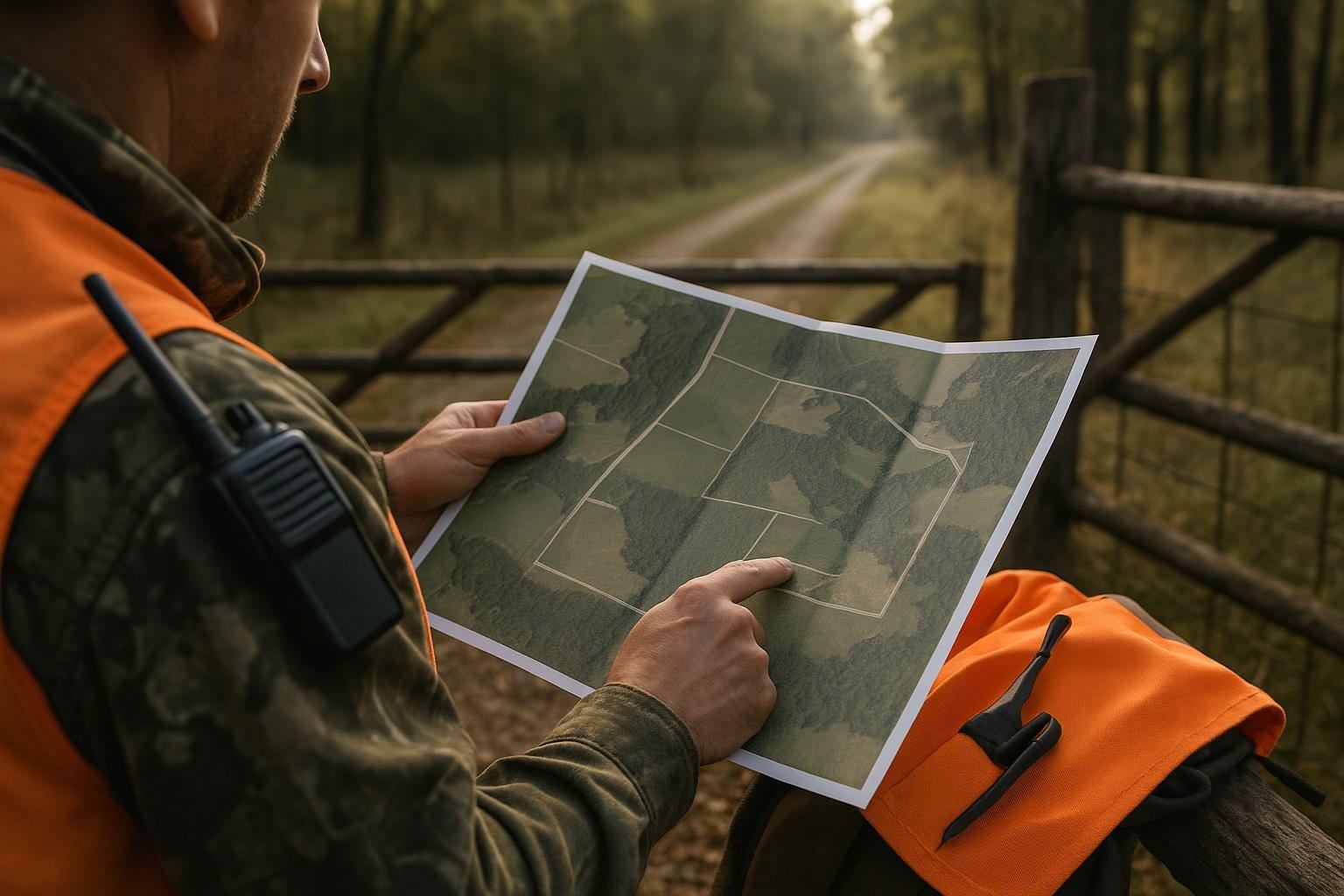
A property may look simple on a map yet create problems on arrival: an unclear boundary, closed road, neighboring stand or changed regulation. Prepare by asking precise questions, confirming what is legal now and deciding what you will do when conditions no longer support a safe, ethical hunt.
Start with the property, not the gear
Before discussing equipment, establish what access includes. Ask for the current boundary map, entry points, parking limits, stand or blind locations and areas reserved for safety, habitat work or another hunter. A digital map helps, but it does not replace a conversation about landmarks visible on the ground.
For deer hunting leases, clarify how shared roads, food plots, creek crossings and recovery routes are handled. For turkey hunting leases, ask which ridges, fields or roost areas are off-limits during certain activities. Quail hunting leases may require agreements about walking routes, dogs, gates and livestock.
Treat every map as a planning aid, not proof that conditions are unchanged. Timber work, flooding, downed fences and construction can alter access. If a boundary is uncertain when you arrive, stop and resolve it before going farther.
Turn guide communication into a pre-trip briefing
Tell the guide or lease contact about your experience, preferred pace, physical limitations and willingness to change plans. This can prevent a rushed morning, unsuitable route or disagreement about what constitutes a good opportunity.
Ask: What is the meeting procedure? Who can change the plan? How will weather, livestock activity or another party affect access? What is the protocol for a wounded animal, lost dog, misplaced item or vehicle problem? If cell service is unreliable, agree on backup communication and a rendezvous point.
Discuss shot expectations before the hunt. Agree that you may decline a marginal angle, wait for a clear target area or end a stalk when the boundary becomes uncertain. The hunter makes the final decision within the law, but shared expectations support ethical choices under pressure.
Verify rules close to departure
Regulations can change. Check current guidance from the relevant state or provincial wildlife agency for seasons, licenses, tagging, legal methods, bag limits, transportation rules, hunter education requirements and local emergency orders. Then confirm property-specific restrictions with the landowner or guide.
Do not rely on rules remembered from another county, species or season. If official wording is unclear, ask the agency before traveling; an informal online comment is not permission.
Keep required documents accessible, along with a charged phone and written contact list. Organized information makes a check-station delay or access question easier to manage.
Walk the first route with restraint
Make your first approach slower than a normal hunt. Identify roads, gates, fences, drop-offs, water, active work areas and neighboring activity before choosing a position. Mark only what you can verify, and never cross a line simply because it appears unused.
Look for pressure and disturbance without turning the inspection into unauthorized scouting. Fresh equipment tracks, livestock, recent cutting and other hunters may affect where a safe setup is possible. Ask before opening gates, moving obstacles, using a vehicle off the main route or entering a structure.
For birds, confirm where shots can be taken safely in relation to roads, buildings, livestock and other parties. For deer, consider the recovery route as well as the firing direction. A legal shot can still create an unacceptable recovery problem if the animal may cross a boundary or enter dangerous terrain.
Use one field checklist before leaving the vehicle
A short check should reflect real decisions, not become a packing catalog:
– Confirm the boundary, assigned area and legal access route.
– Carry current licenses, permits, tags and required identification.
– Review the day's season, method, harvest and reporting rules using official sources.
– Establish a safe backstop, no-shoot areas and a plan for people or livestock.
– Check weather, daylight, communications and the return or extraction plan.
– Agree on the response to a wounded animal and who can call a halt.
– Leave gates, roads, blinds, vegetation and evidence of your visit as required.
If an answer is missing, ask; do not guess.
Make the ethical call when conditions change
The key question is not only whether an animal is technically within range, but whether the full situation supports a responsible attempt. Poor visibility, uncertain identification, a partially screened target, a crowded property or a likely boundary crossing all weigh against taking the shot.
The same standard applies to pursuit. If tracking would require crossing an area you do not control, disturbing another party, driving where vehicles are prohibited or continuing after useful sign disappears, pause and contact the guide or landowner. Recovery matters, but it does not override property rules or safety obligations.
Declining a questionable opportunity is a practical skill, not a failed trip. A guide who knows you will protect boundaries, livestock, habitat and other hunters can plan more effectively with you.
Leave the ground better than you found it
Follow instructions about access, gates, trash, fires, bait, feeders, dogs and vehicle use. Do not collect antlers, feathers, plants or other material unless the owner and applicable rules allow it. Report damaged infrastructure, invasive-species concerns, unsafe conditions or suspected violations through the appropriate channel rather than confronting people in the field.
After the trip, record what changed your plan: a washed-out road, confusing boundary, heavy pressure or a regulation question. Share useful observations with the lease contact without exaggerating what you saw. That feedback can improve future hunting lease preparation and protect the property for deer, turkey, quail and the people who depend on it.
A responsible hunting checklist turns uncertainty into specific decisions: verify the ground, communicate clearly, confirm current rules and walk away when conditions no longer support a safe, lawful and respectful hunt.